

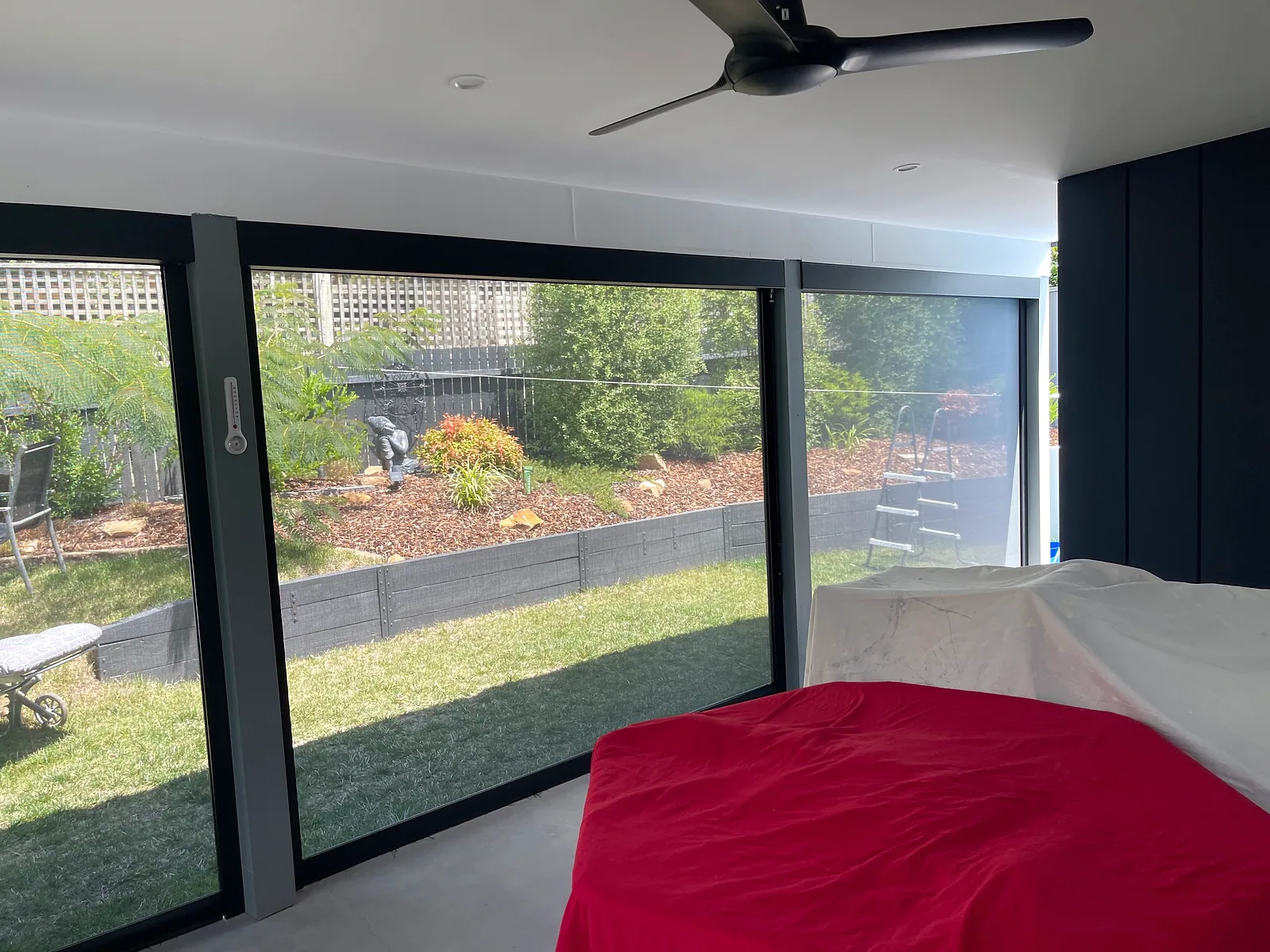
A patio can look generous when it is empty, then feel quite different once the table, chairs and lounge are in place. If you are planning outdoor blinds, think about movement as well as shade. The route from the kitchen to the garden deserves just as much attention as the view from your favourite seat.
Walk your everyday routes first
Start with an ordinary day. Walk from the house to the garden, clothesline and side gate. Notice which patio openings you pass through, where you turn with a washing basket, and whether a chair already makes the route awkward. These are useful details to show your installer before deciding which openings to cover.
Sketch the patio from above and mark the routes you want to keep convenient. The drawing does not need to be accurate enough for manufacture; it is a conversation starter. Include steps and changes in level, and explain any access needs within your household rather than assuming they will be obvious at the measure.
Test the furniture layout you actually use
Put chairs in the positions they occupy when someone is sitting at the table. Open the house door through its usual travel and check the route past the lounge. A layout that works with every chair tucked away may be frustrating during a family meal.
Think about occasional use too. Where does an extra chair go when friends visit? Do you move a serving trolley through the space? Photograph the patio with the furniture in use positions so the installer can understand your intended layout, including items you might move before the appointment.
Talk through each opening separately
All Seasons Living offers TruScreen track blinds and Straight Drop outdoor blinds. The systems have different side detailing and fixing arrangements. Ask the team to show where the proposed guides, bottom bar and any fixing points would sit at each opening, then relate those positions to your sketch.
Be clear about which opening is your regular way into the garden. Ask how that route will work when neighbouring blinds are lowered, and what needs to be raised or released before you pass through. Do not assume a lowered blind provides a walk-through opening or that every section will operate independently; have the proposed arrangement explained.
Keep operation within easy reach
Consider where you will stand to operate each blind after the furniture is back in place. If a manual control is proposed, ask to see how you will reach and use it. If motorisation is proposed, discuss a convenient control location and how the quoted setup lets you select the opening you want.
A useful question is: “Can I open our usual garden route without moving the furniture or changing all the other blinds?” The answer depends on the final layout and controls. Ask the team to demonstrate the intended sequence, and explain the operating instructions for the exact system rather than relying on a general product description.
Leave space for care and future changes
Include access for cleaning in the discussion. Large pots and storage boxes placed close to a blind can make its edges harder to reach. Ask what space the system needs for operation and care before choosing permanent positions for those items.
Mention planned changes such as a larger dining table, new paving or a replacement door. Before ordering, check that the proposal reflects the openings and access priorities you discussed. Keep your sketch and notes with it, so the finished installation can be understood in the context of the whole patio.
Make it your own
A little local advice goes a long way.
Talk through your space with our Canberra team.
Explore ASL outdoor blinds